
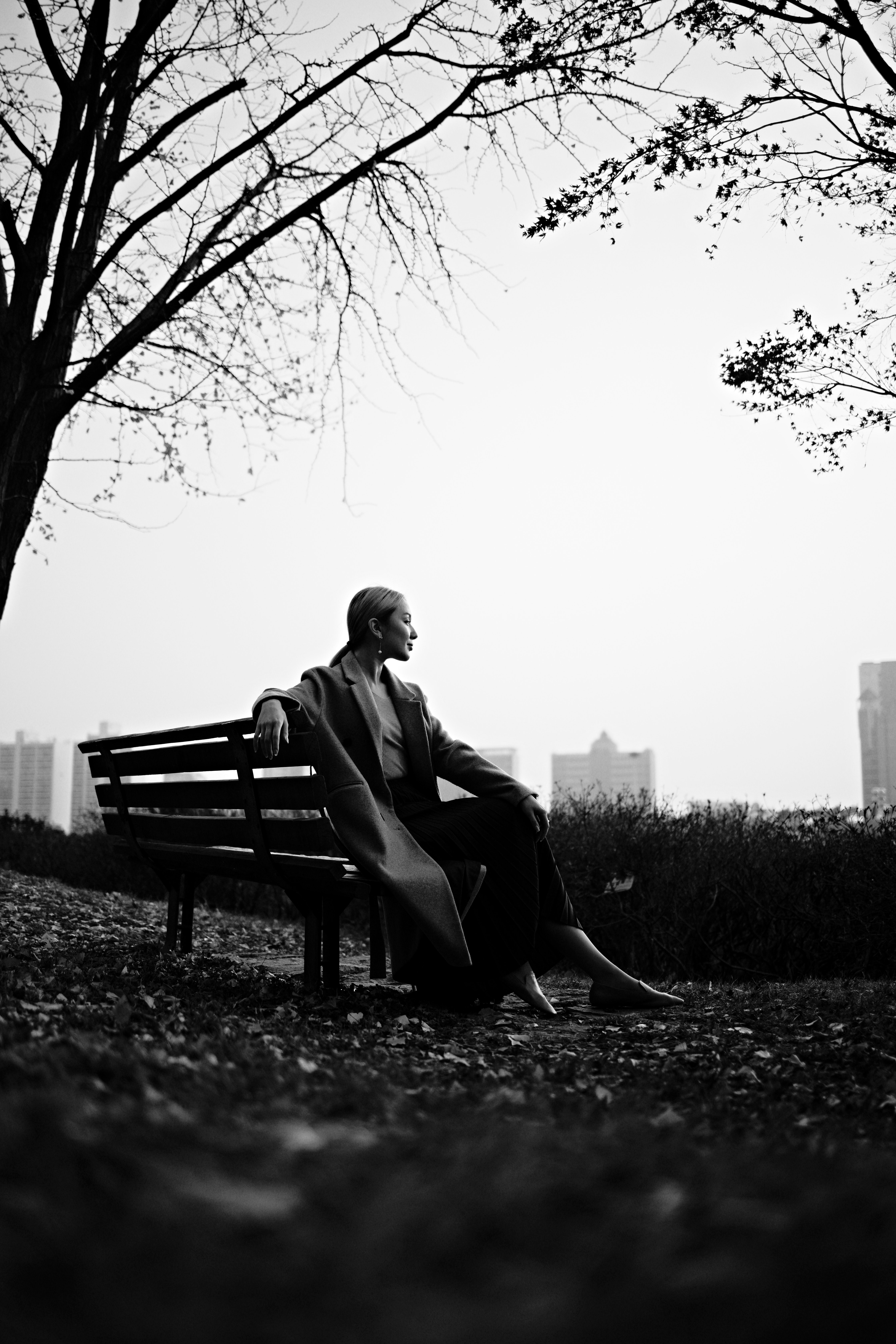
The reason why I’m not writing a lot on this blog is probably the same reason that I still absolutely suck at the therapy. I actually hate talking about my issues. And if I do, I only relay information, in a calm and cognitive way. I don’t know how to sit in the feeling. I don’t know how to be vulnerable.
I mean, I am vulnerable sometimes. I feel things. But that happens in spaces that I experience as safe: either I’m alone or I’m at home. I can be vulnerable and emotional with my partner but I’m actually not sure if it is because I feel safe them or because we live together and I can’t avoid them seeing me in despair, sadness, anxiety or anger. I can’t hide from them the same way I can hide from others.
I can easily pretend that I am fine and functioning for many hours on end, even if I’m really unwell. It is not a skill that I have consciously honed, nor that I can control. It just happens automatically. It is dissociation – when I am not in a safe space (which means being alone), my brain sees the need to protect me by pretending I am okay. So I become less of a potential victim, or maybe also less vulnerable to get hurt through bullying, shaming or all the other things that I might be subconsciously scared of.
Now, generally, I think that it is a good thing. I like that my brain protects me (and the especially the very vulnerable parts inside) from hurt. And I honestly rather like being seen as a strong and well-functioning human. But sometimes maybe vulnerability is needed, especially in connections with people that I care about. With friends, I still can’t be vulnerable. I share things in ways that it makes it impossible for them to grasp how deeply these things affect me emotionally. Consequently, I tend to end up as the caretaker of the connection.
I don’t know how to take space emotionally. I never realized that before because I always was under the impression that I understand human relationships pretty well. But looking at it now. I recognize that I don’t know how to participate in the sharing game unless I am explicitly invited, and even then, I tend to be emotionally distant from the things that I share. People tend to just take that space, they just share, feeling safe enough to do so. I just don’t do it. And even if questions are asked, and someone shows interest, I’m usually short and not too personal with my replies. I do not do this consciously. But everything goes through a filter, a sort of invisible wall that I can’t remove. Now do I even want to remove it though? I don’t know – there are parts inside that feel very strongly about protecting our feelings, and those that hold those feelings. It is nothing that I have ever deeply discussed, it always just felt like the appropriate automatic response.
It feels almost like I’m doing being human wrong. But no one realizes that I do, because they feel so safe with me, and they assume my lack of sharing and being emotionally open about my struggles or my past, just means that I am strong and not in need of support.
All of this could become problematic but it really hasn’t for me. I have had good friendships, and I have some really lovely ones now too. I’m in a relationship where I am actually forced to show my vulnerabilities. I never really thought about it before.
But now that I’m in therapy, and I’m for the first time actually trying to get something out of therapy, I realize how fucked up I am when it comes to being human. I’ve been seeing the same therapist, a trauma and DID specialist, for 18 months now. I absolutely adore her. There are parts of me that are deeply attached, parts that are impressed by her abilities, others who just enjoy casual conversations with her. There is nothing wrong with the therapist. It is me that doesn’t know how to human.
Apparently, it is quite expected that you are emotional in therapy. And if you want to do therapy for trauma, you actually need to address and process a lot of emotions related to terrible things that have happened to you. If you have DID, a lot of the work means letting trauma holders speak and get heard. And for most people that is not an issue. The moment they recognize the safe space, they let go and they let it all out. They cry, feel the feels, get heard, process. But I don’t know how to fucking do it.
The only emotion that my therapist has had to deal with so far, is anger or frustration. We have had our fights and conflicts when I felt she overstepped boundaries, or she pushed too hard. It just happened during our last session again. She is taking a relational approach, which I appreciate, so some of them involves disagreements. I don’t like it, but I also don’t blame her. I like that she is giving back in a way that real human relationships work. But my frustration never lasts long, and it is not the kind of vulnerability that I should be displaying.
And I don’t know how to be vulnerable on demand. How am I supposed to just turn in on? I know that most people don’t deal with this issue. They just automatically allow themselves to be vulnerable because their brains recognize a safe space. But here I am, after 18 months, and I am still absolutely disconnected from my feelings during therapy sessions. I don’t blame my therapist because she has done an excellent job at creating a connection and safe space. So why the fuck can’t I do it?
It definitely has to do with that I am outside of my home. I’m already stressed when I get to her office. I had to leave my safe space, get there and sit in a room with another person for an hour. So I automatically go into survival mode, which apparently involves me not being connected to my feelings. Would it be easier if I were in my own home though? I don’t know.
I have recognized that the only times I have ever been vulnerable, and emotionally open and broken, with other people, was when I was forced to it. As in, I couldn’t escape. It was when I was at psych hospitals and had people watching me 24/7 or when I lived with someone in a small space and there was nowhere to hide. I never actively chose to be vulnerable with anyone. But do people actually do that, they actively choose?
Let’s leave the forcing out, and the whole 24/7 thing. Because I only have two sessions of an hour each every week. But can I actively choose to be vulnerable? From what I’ve seen from others, it is something that they don’t choose. It just happens. And the bigger question is: how do I get around the parts that automatically going into protective mode because they seem to deem every possible situation unsafe for vulnerability.
I need to let the trauma holders out in therapy. I need to be vulnerable. I need to be able to sit in my feelings. So I can make any kind of progress. And it always hits the wall of me being unable to do the thing that everyone else doesn’t even think about having to work on. I don’t know how to actually allow myself to do the thing. I am scared of humiliation and shame, I am scared of getting hurt or being ridiculed. I am worried about not being in control. I don’t know how to override that. Because there doesn’t seem to be much help for that. It is an automatic response for most people. And here I am with my emotions. Neatly hidden behind a wall of protection.
Can I logic myself into it? As in, if I ask myself the question: why do I have to be vulnerable in therapy? What are the benefits? I often end up not thinking there are many benefits because it seems like a promise of an elusive future where vulnerability leads to processing and strength. There are no immediate benefits and thinking of any kind of long-term future is hard for someone who struggles with hopelessness and helplessness.
How the fuck can I become human?
 Fragments of Reality
it’s a process and writing and wondering and taking time is all helpful, I find…
LikeLike